Sofia’s project
Since our data spanned more than 150 years, I was interested in creating something that demonstrates the positive changes the public library system’s media representation has undergone. As such, this series of photos adapts a popular meme to visually depict how the representation of three important themes began, in comparison to how they are represented more recently. The three themes that are communicated below via the format of the “how it started” … “how it’s going” meme are the trajectory of children as a userbase of the library, the acceptability of the homeless population using the library, and communities turning to the public library during hard times.
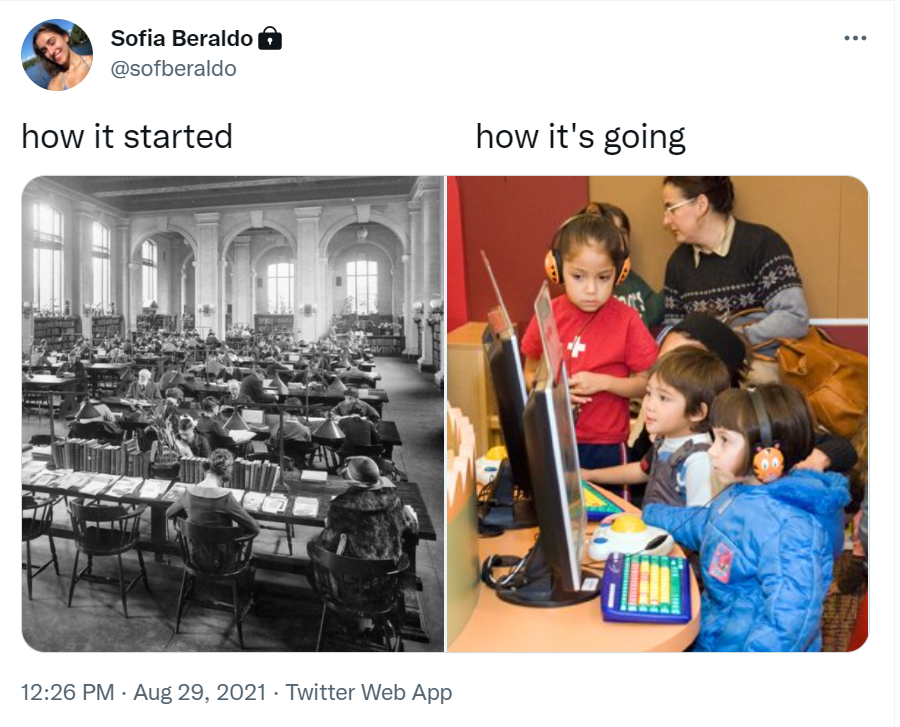
The first theme pictured demonstrates the growth in the acceptability of children in the library and the resources available to them. Initially, many members of the library board thought that it was not the role of the public library to educate children, as they already had access to resources through the public school system (C. 3). Additionally, it was argued that children may be too distracting to professionals using the library. However, there was considerable concern that without access to the public library, children might get involved in other more egregious past-times (“Carnegie’s Generosity” 7). Ultimately, these two photos demonstrate public libraries in Toronto prior to and during the inclusion of children in the userbase. In the end, the library is able to establish itself as “a rich store-house for the historian of the future” (“To Enrich the Public Library” 2).
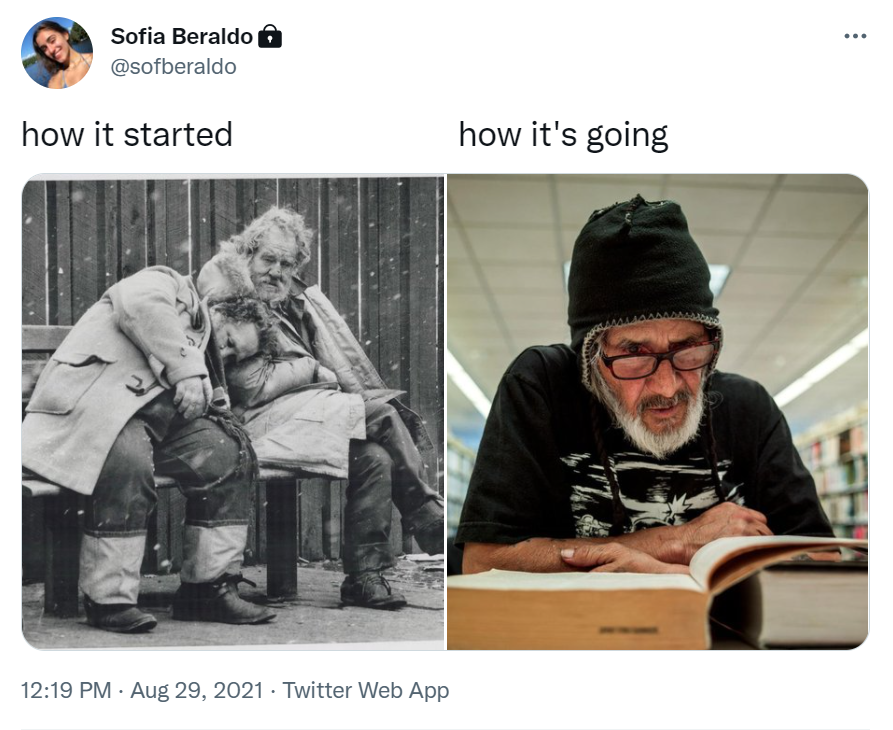
The second theme communicated delves into the acceptability of the homeless population using the library. Similar to children, a concern with allowing the homeless population to utilize the library is that it would drive away the more prestigious userbase. One article touches on the issue of having “tramps,” as well as the unemployed lounging at the public library (“LIBRARY PROBLEMS” 4). While this remains to be a concern, there has been a shift towards understanding that the public library may be a safe haven for these individuals and that permitting them to use the library’s resources can lead to education and personal growth (“Public Libraries Used for Evening Classes” 8).
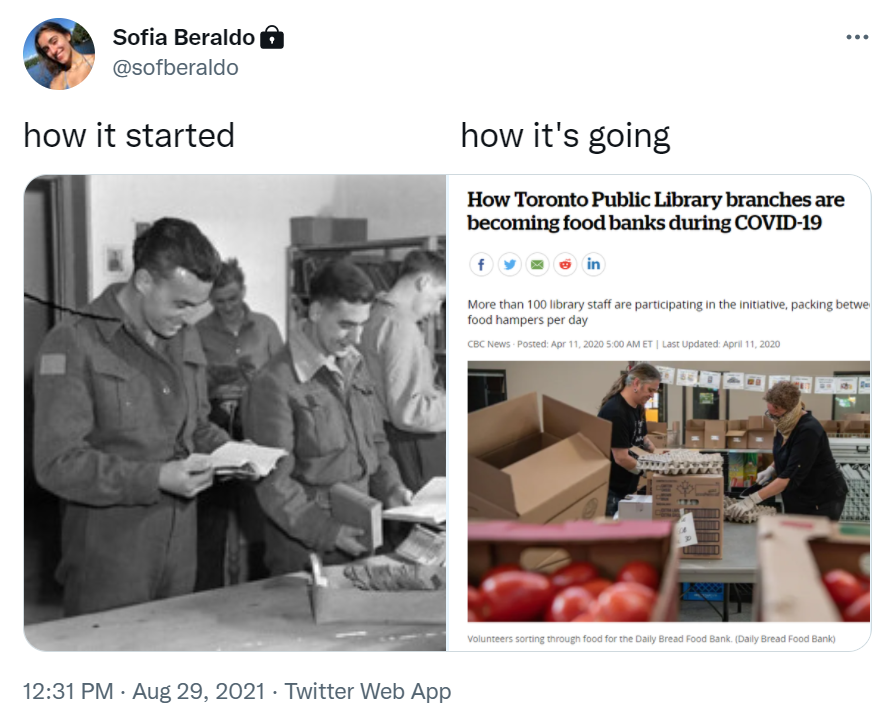
The last theme demonstrates the public library as a place of refuge during hard times. This was prevalent in our findings after both the first and second World Wars, as returning soldiers turned to the library’s resources while assimilating to post-war careers (Jeffers 20). Something similar has been observed throughout the pandemic as Toronto Public Library branches repurposed their space during lockdown closures to become food banks (Ricci). This establishes the public library as a safe and reliable place for those going through hard times, whether alone or as a community.
Katrina’s project
description